
Case study
University Hospital Southampton Deploys Eolas Medical Trust-Wide to Transform Inpatient Diabetes Care and Reduce Specialist Referral Burden
University Hospital Southampton NHS Foundation Trust deployed Eolas Medical trust-wide as a diabetes care support tool — empowering non-specialist clinicians to manage basic diabetes issues confidently, improving referral quality, and supporting safer insulin prescribing across the hospital.
Published Updated
Background
University Hospital Southampton NHS Foundation Trust is one of the largest teaching hospital trusts in England. With diabetes affecting approximately 15–20% of all adult inpatients in the UK — a figure projected to rise to 20–30% within the next five to ten years — the trust’s Diabetes Team recognised the need for a scalable approach to supporting non-specialist healthcare professionals in managing inpatient diabetes care.
The Challenge
Before 2015, non-specialist clinicians found supporting diabetes care challenging due to the lack of concise guidance in a single location and the time required to find the correct protocols. It was not possible to formally teach the entire workforce directly on an ongoing basis. The resulting gaps in knowledge led to errors and harms in clinical diabetes care, particularly around insulin prescribing, hypoglycaemia management, and hyperglycaemia recognition.
Implementation
The rollout was relatively smooth, as the trust was replacing a previous app and most staff were already familiar with the concept. The team continues to remind staff of the platform’s availability at every formal opportunity, including during the monthly staff inductions for new starters. Posters, email reminders, and teaching sessions have all been used to drive awareness and adoption.
Key Outcomes
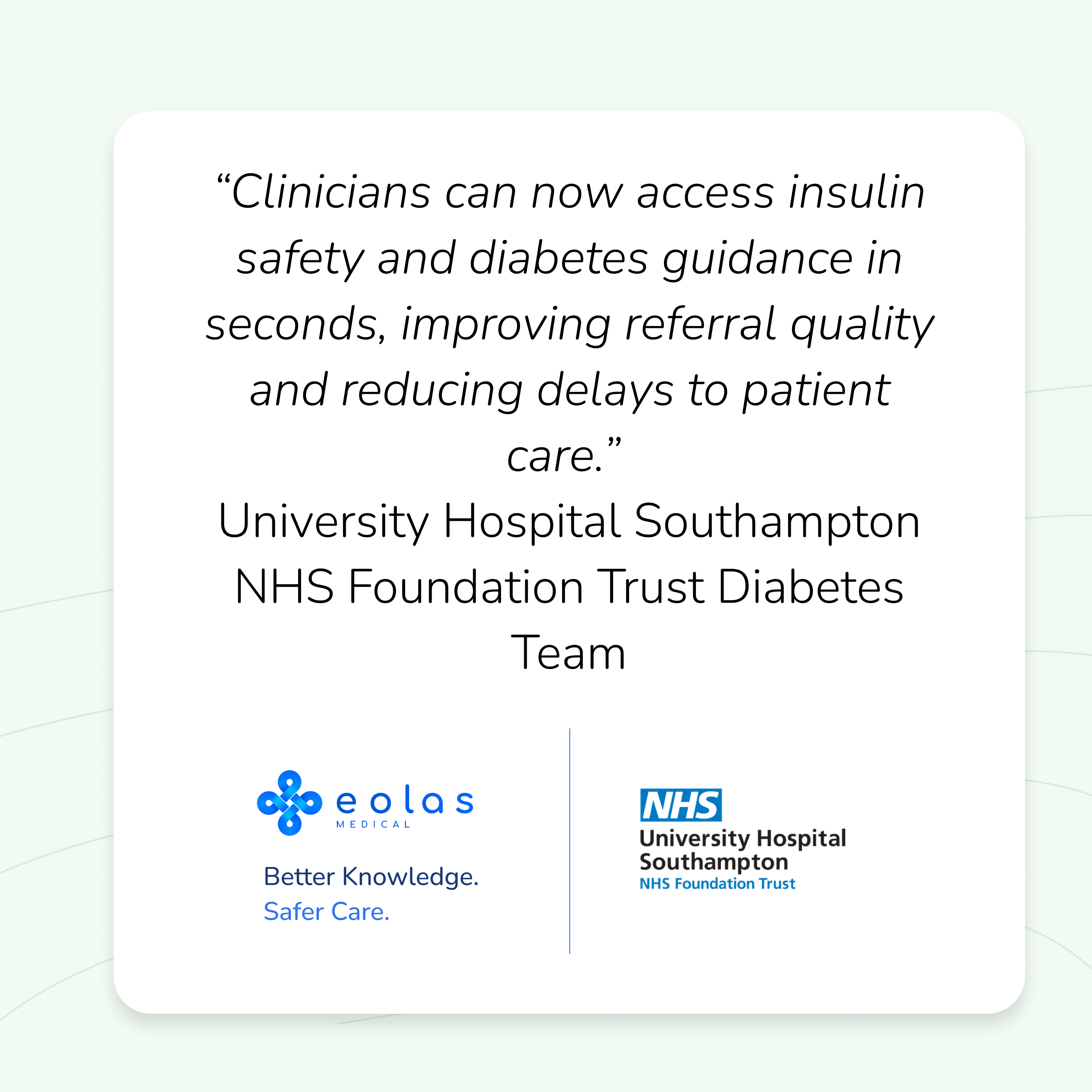
Since adoption, supported by formal teaching and ongoing communication, the quality of referrals to the specialist Diabetes Team has improved significantly. The team has been clear with doctors that they are expected to use the app first to address basic issues rather than referring all diabetes queries to the specialist service — a practice that previously delayed patient care and represented a key patient safety concern. This is especially important given the trust does not have an out-of-hours clinical diabetes service.
Staff have reported that after initial familiarisation with the content and navigation, they can find clinical answers quickly. Guidance on insulin prescribing safety is being actively used, and action is taken more often on hypoglycaemia and hyperglycaemia following the app’s protocols. Staff are generally following the guidance and quoting it in medical notes, suggesting genuine integration into clinical practice.
The content developed at Southampton has also been adopted and adapted by other trusts, indicating that the approach has wider value across the NHS. Staff satisfaction feedback has been generally positive, with clinicians reporting increased confidence and easier access to the resources they need to support basic diabetes care.
Ratings
- Team Efficiency: 4/5
- Ease of Information Access: 5/5
- Guideline Adherence: 5/5
- Patient Care: 4/5
- Staff Satisfaction: 3.5/5
Related reading
Case study
Milwaukee County OEM Case Study: Enhancing EMS Efficiency and Confidence with Eolas
Milwaukee County EMS improved access to life-saving guidelines and staff confidence through Eolas, transforming prehospital care delivery and decision-making.
Published
Case study
Queen Victoria Hospital Strengthens Antimicrobial Stewardship and Guideline Governance After Seamless Migration
Queen Victoria Hospital migrated to Eolas Medical across its Pharmacy, Nursing, Anaesthetics, and Medical departments.
Published
Case study
Royal Berkshire Hospital
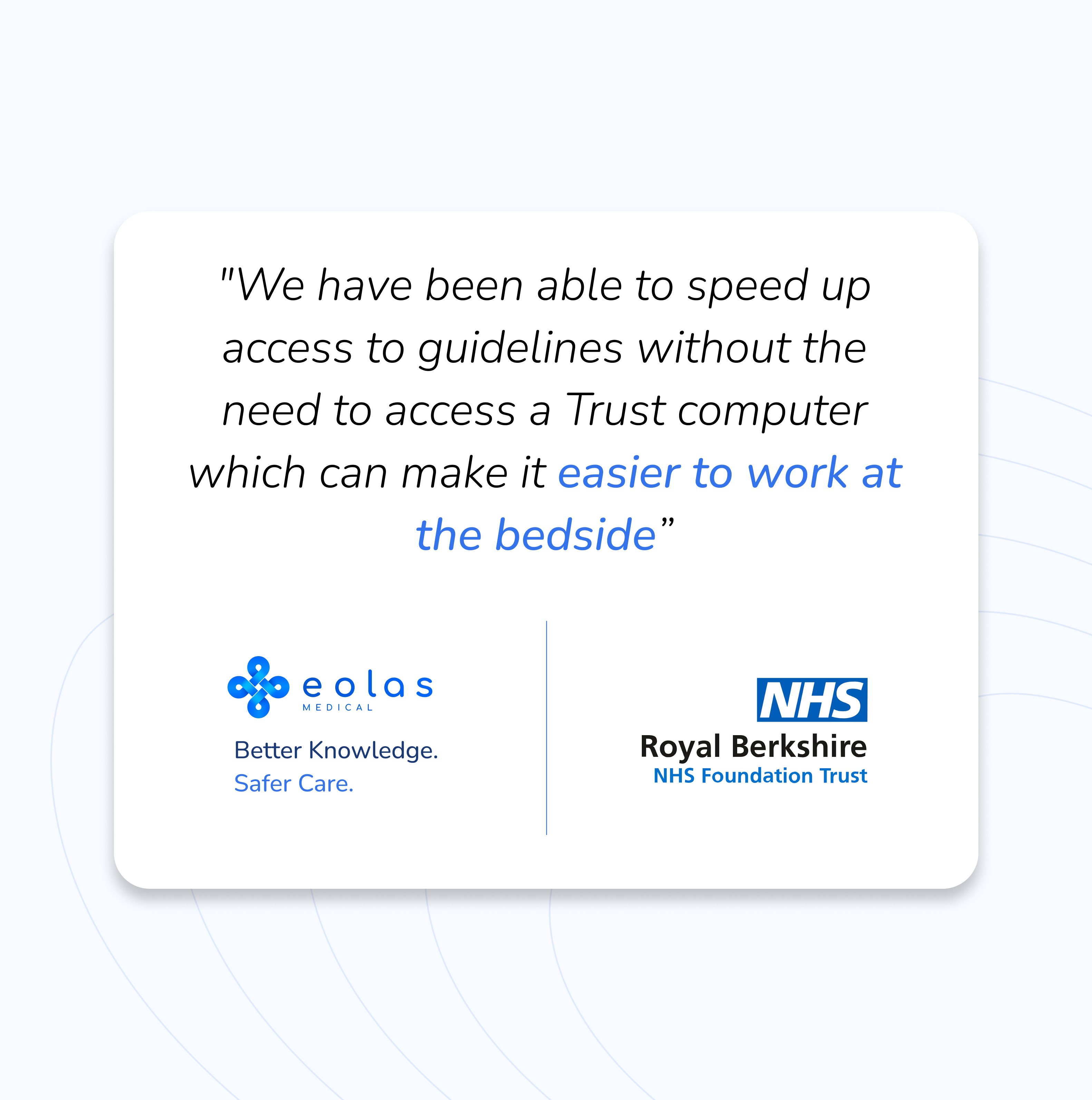
Royal Berkshire Hospital's Intensive Care and Anaesthetics departments deployed Eolas Medical to overcome slow Trust computer systems and fragmented resource access. The team now accesses emergency pathways, clinical guidelines, and departmental rotas directly at the bedside — eliminating the need to log into Trust IT systems during time-critical situations.
Published