Case study
Aneurin Bevan University Health Board Nursing Team Transforms Education and Clinical Access with Eolas Medical
Aneurin Bevan University Health Board's Emergency Department and Minor Injuries Unit nursing team used Eolas Medical to overcome limited IT access and intranet dependence, empowering 197 nurses with instant clinical information and educational resources on their smartphones.
Published Updated
Organisation Overview
• Name of Organisation: Aneurin Bevan University Health Board (ABUHB)
• Type of Healthcare Setting: NHS Hospital
• Department/Team Using Eolas: Emergency Department & Minor Injuries Unit (ED & MIU) Nursing Staff
• Setting Details: 197 nursing staff across the department
The Challenge
The nursing team at Aneurin Bevan University Health Board's Emergency Department faced a persistent set of frustrations rooted in outdated information access. Staff relied heavily on the Trust's intranet for educational resources, departmental news, and protocol updates — but the intranet was proving increasingly inadequate for the demands of a busy emergency setting.
During shifts, clinical staff had limited time and even fewer available computers to access the information they needed. NHS budget constraints had blocked necessary IT equipment upgrades, leaving nurses competing for scarce terminals. Outside of work hours, there was simply no way to access Trust resources at all. The result was a workforce that was underinformed, frustrated, and losing valuable time — time that could have been spent on patient care or professional development.
As the team described it:
"Staff are missing valuable educational opportunities, spending excessive time waiting for computer availability and not receiving critical departmental updates."
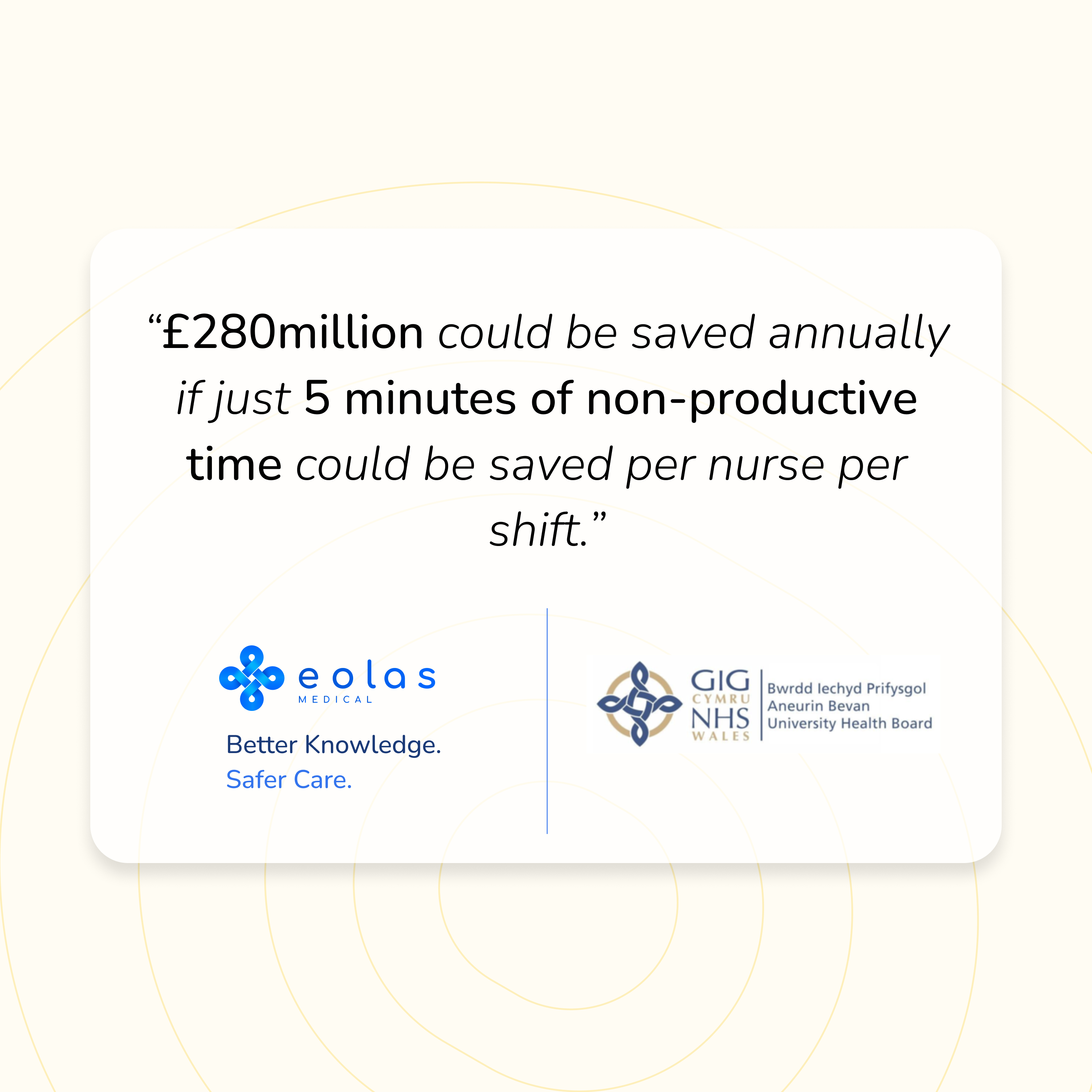
Research from the Department of Health and Social Care suggested that if just five minutes of non-productive time could be saved per nurse per shift, the NHS could save £280 million annually.
The Solution
Recognising that 94% of the UK population owns smartphones, the team saw an opportunity to leverage personal mobile technology. They adopted Eolas Medical as their platform for instant, on-the-go access to clinical information and educational resources.
The implementation followed a structured PDSA (Plan-Do-Study-Act) cycle. In the planning phase, the team evaluated the app's capabilities, contacted Eolas Medical's developers, secured management approval, and developed a launch strategy. They then built a comprehensive ABUHB ED and MIU Space within the app, complete with user guides, video tutorials, and FAQs.
A pilot group of 10 users trialled the app first, providing feedback and recommendations before wider rollout. Following positive feedback from the pilot, the team launched the app to the full department, using strategically placed posters and QR codes in high-traffic areas to drive adoption.
The Eolas space was organised into practical sections including clinical information and pathways (Medusa IV medications, NICE guidelines, clinical calculators), useful contacts (an up-to-date directory of all ABUHB wards, departments, and specialty doctors), educational and clinical skills videos, departmental news and protocol changes, and step-by-step How To guides for frequently asked questions.
Key Benefits
The impact was immediate and measurable. The app provided instant, reliable access to clinical information and educational resources — with or without internet connectivity. Key benefits included:
• Enhanced quality assurance aligned with NMC (2023) standards for nursing and midwifery education
• Improved adherence to clinical protocols, reducing errors and promoting continuous learning
• Boosted staff confidence and enhanced departmental efficiency
• Approximately 75% of staff used the app at home for educational purposes
• Nearly all respondents found the app beneficial for their practice
• Regular updates maintained relevance and effectiveness of shared content
Quantitative Feedback
A Microsoft Forms survey gathered structured feedback from 57 out of 197 staff members. The findings showed that most respondents found the app very useful, with approximately 75% using the app at home for educational purposes and nearly all finding it beneficial for their clinical practice.
Conclusion
Aneurin Bevan University Health Board's nursing team demonstrated that by putting clinical resources directly into the hands of frontline staff through Eolas Medical, they could overcome the barriers of limited IT infrastructure, time constraints, and outdated information-sharing methods. The initiative empowered nurses with anytime, anywhere access to the information they need — enhancing care quality, supporting professional development, and aligning with NMC standards for continuous improvement.
Related reading
Case study
Milwaukee County OEM Case Study: Enhancing EMS Efficiency and Confidence with Eolas
Milwaukee County EMS improved access to life-saving guidelines and staff confidence through Eolas, transforming prehospital care delivery and decision-making.
Published
Case study
Queen Victoria Hospital Strengthens Antimicrobial Stewardship and Guideline Governance After Seamless Migration
Queen Victoria Hospital migrated to Eolas Medical across its Pharmacy, Nursing, Anaesthetics, and Medical departments.
Published
Case study
Royal Berkshire Hospital
Royal Berkshire Hospital's Intensive Care and Anaesthetics departments deployed Eolas Medical to overcome slow Trust computer systems and fragmented resource access. The team now accesses emergency pathways, clinical guidelines, and departmental rotas directly at the bedside — eliminating the need to log into Trust IT systems during time-critical situations.
Published